Dog Dental Surgery

Dog dental surgery in the UK ranges from routine extractions to complex, specialist procedures aimed at treating periodontal disease, fractures, and oral trauma. These procedures are almost exclusively performed under general anaesthetic to ensure the dog's safety and comfort.
Examples of dog dental surgeries commonly performed in the UK:
Tooth Extractions (Simple and Surgical)
- Routine Extractions: Removal of loose, broken, or severely decayed teeth.
- Surgical Extractions: Required for strong teeth (like canines or molars) where the gum is lifted, and the tooth is sectioned into pieces for removal.
- Retained Deciduous Teeth: Removing "baby teeth" that failed to fall out, which is common in small breeds to prevent crowding and future misalignment.
- Full Mouth Extractions: Performed in severe cases, such as extreme periodontal disease or Canine Chronic Ulcerative Stomatitis (CCUS)
Endodontic Treatments (Saving Teeth)
- Root Canal Therapy: A common alternative to extraction for fractured, discoloured, or non-vital teeth (e.g., a broken, painful canine).
- Vital Pulp Therapy: Treating a recently broken tooth (often in younger dogs) to keep the tooth alive and avoid extraction.
Oral Surgery and Trauma Repair
- Jaw Fracture Repair: Stabilising broken, fractured, or dislocated mandibles or maxillae.
- Oronasal Fistula Repair: Surgically closing a hole that has developed between the oral and nasal cavities, often caused by a severe abscess on a canine tooth.
- Tumour/Growths Removal: Excision of oral tumours, epulides, or cysts (neoplasia management).
- Cleft Palate Repair: Surgical correction of congenital defects
Periodontal and Restorative Surgery
- Gingivectomy/Gingivoplasty: Removing excess gum tissue (hyperplasia) to eliminate pockets where bacteria grow.
- Crown Lengthening: A technique used when a tooth is broken near the gum line.
- Restorations/Fillings: Treating caries (cavities) or repairing enamel defects.
- Orthodontic Surgery: Adjusting teeth or extracting specific teeth (like lingually displaced mandibular canines) that are causing painful damage to the hard palate.
Typical UK Dental Procedure Workflow
- Assessment: Pre-anaesthetic blood tests and full oral assessment.
- Imaging: Dental X-rays are crucial in the UK to look below the gum line.
- Anaesthesia & Cleaning: Scaling and polishing, often monitored by a specialized nurse.
- Surgery: If diseased teeth are found, they are removed, and gums are stitched with dissolvable sutures
Ripley's Experience:
- Retained Deciduous Teeth: Removing "baby teeth" that failed to fall out
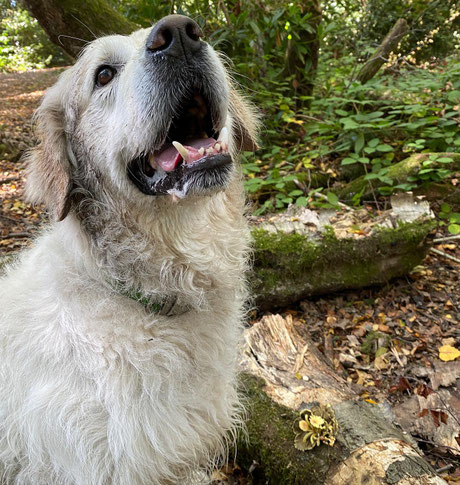
Due to Ripley's early elbow orthopaedic issues he was unable to fully lift his front right fore paw fully to clear the ground so was known to trip and obviously unlike a human he could not break his fall like we would with our hands / arms. As a result he had a couple of jaw clattering pavement stumbles which caused his broken and cracking canines.. one was repaired and the other was filed down, as one of his pawrents is a (human) biomechanist and knows the importance of canines, thus Ripley was fitted with a crown.
- Crown Lengthening: A technique used when a tooth is broken near the gum line.