What is TPLO surgery?

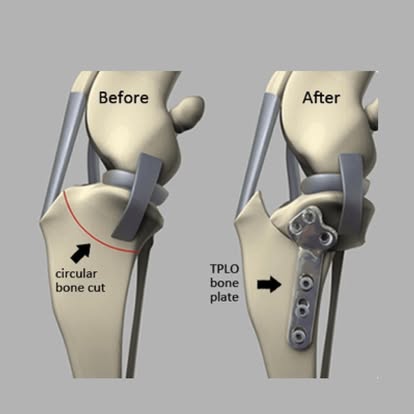
Tibial Plateau Leveling Osteotomy (TPLO) is a highly successful, gold-standard orthopedic surgery for dogs to repair a torn cranial cruciate ligament (CCL), similar to an ACL tear in humans. It involves cutting and rotating the top of the tibia (shin bone) to change the knee's angle, neutralizing instability without needing to replace the ligament.
Details About TPLO Surgery:
- Purpose: To stabilize the stifle (knee) joint, eliminate pain, and prevent further damage/arthritis caused by a torn ligament.
- Procedure: A surgeon makes a curved cut in the top of the tibia, rotates the bone segment to flatten the slope (leveling the plateau), and secures it with a metal plate and screws.
- Candidates: Often recommended for medium-to-large, active dogs, or dogs with steep tibial slopes.
- Success Rate: 90–95% of dogs return to normal activity levels.
- Recovery: Initial healing takes about 10–12 weeks, with full recovery (rebuilding muscle) taking up to 6 months.
Benefits:
TPLO is generally more durable for larger or athletic dogs. It provides better long-term stability and is associated with a lower incidence of arthritis over time
Recovery and Risks:
While very effective, TPLO is a major surgery. The first 12 weeks require strict exercise restriction. Potential, though less common, complications include infection, swelling, or, rarely, implant failure
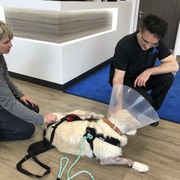
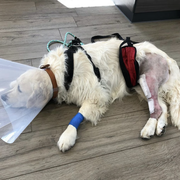
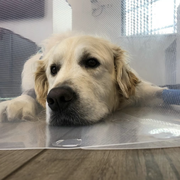
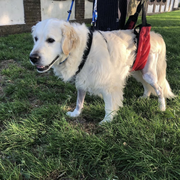
Ripley's TPLO Surgery Experiences:
TPLO Surgery Complications - Implant Failure (Right)
27/10/2023
Seen by: Dr Jan Janovec at Fitzpatrick Referrals, Surrey
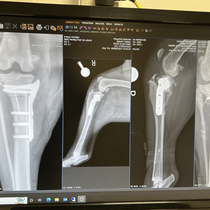
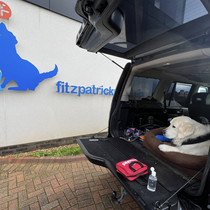
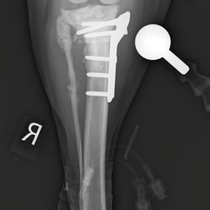
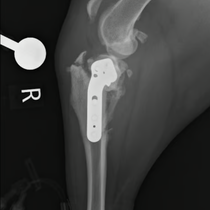
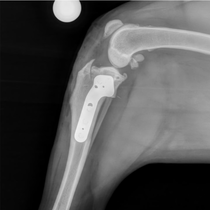
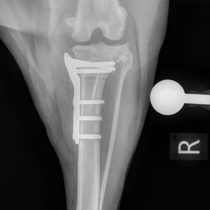
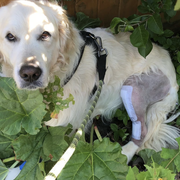
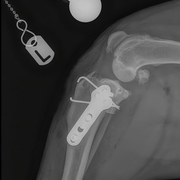
Shortly after the surgery was completed in August we raised concerns about Ripley's knee function, sent videos to his surgeon Christos at Fitzpatrick Referrals & were told that the limb function was normal... having gone to another vet to have x-rays performed even we could see something wasn't right. Thus the return to Fitzpatrick referrals... we refused to see his original surgeon again so were referred to one of the Senior Surgeons for a consultation where it was confirmed that the implant failed causing fractures in his tibia & fibula, on the x-rays it is also obvious that one of the screws was backing out & the other implant pins have bent (see x-ray image below). According to 'TPLO info' this is a rare complication occurring in less than 2% of cases... we were given 3 options (1) leave it to see what happens (2) revision surgery x 2 (3) custom implant.
Though Ripley could potentially have surgery straight away, this is not possible until he has recovered from his paw surgery, so next appointment / surgery to check progress on this was then 6th December 2023... :(
Post TPLO surgery concerns..
22/8/2023
We sent this video to Ripley's surgeon on 22/8/23 (2 days after TPLO surgery) expressing our concerns. Having had a TPLO on the left knee in 2019 we had some idea what we were looking at...

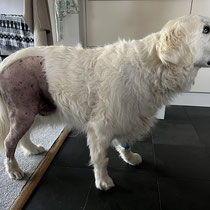
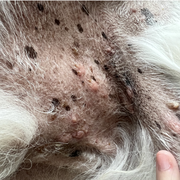
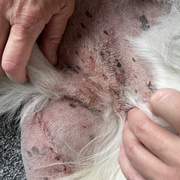
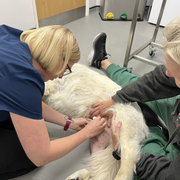
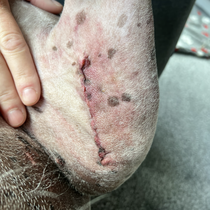
TPLO Surgery Complications (Right) - Skin reaction
21/8/2023
Treated by: Bobby Moseley BVSc MRCVS GPCert
@ Hillside Veterinary Centre, Dorset
Treatment: Hibiscrub cleaning (daily) + Isaderm Gel

TPLO Surgery Complications (Right)
20/10/2023
Assessed by: James Grierson - BVetMed CertVR CertSAS DipECVS FRCVS
Imaging: X-ray showing fractures in Tibia & Fibula.
Xray's completed at Anderson Moores on 20/10/23 & sent on to Fitzpatrick Referrals for review.
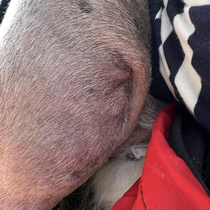
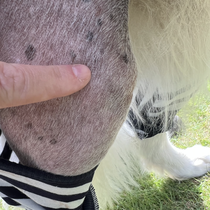
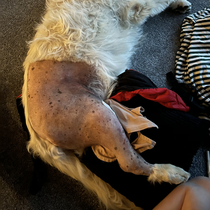
TPLO Surgery Complications (Right) - Seroma
19/8/2023
Seroma checked by TPLO Surgeon Christos Nikolaou - DVM CertAVP(GSAS) MRCVS
@ Fitzpatrick Referrals on 20/8/23
Video emailed to Christos (Surgeon) 22/8/23 - Call back that evening, to say nothing to worry about..

TPLO Surgery (Right)
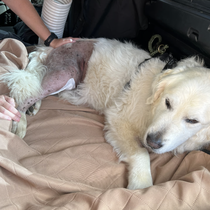
18/8/2023
Diagnosis: Ruptured Cranial Cruciate Ligament (CCL) - Right knee
Surgery: Tibial plateau levelling osteotomy (TPLO)
Surgeon: Christos Nikolaou - DVM CertAVP(GSAS) MRCVS
@ Fitzpatrick Referrals, Surrey

TPLO Surgery (Left)
06/2019
Diagnosis: Torn Cranial Cruciate Ligament (CCL) - Left knee
Surgery: Tibial plateau levelling osteotomy (TPLO)
Surgeon: Prof Noel Fitzpatrick - MVB DSc(Hon) DUniv CertSAO CertVR DipACVSMR DipECVSMR DSAS(Orth) MRCVS
@ Fitzpatrick Referrals, Godalming, Surrey


Managing the wait for TPLO surgery:
Balto Knee Brace
https://baltouk.co.uk/collections/balto-braces/products/balto-jump?variant=47304675557719
A Balto knee brace (specifically the BT Jump or Ligatek) supports a dog's knee joint by providing stability, reducing inflammation, and protecting against cruciate ligament (CCL/ACL) injuries and patella luxation. It acts as a non-surgical alternative or post-surgery aid to manage pain, improve mobility, and prevent further injury.
Key Functions of a Balto Knee Brace:
- Support & Stabilisation: The braces feature lateral aluminium splints in pockets that restrict unnatural movement while allowing the joint to function, which is critical for supporting CCL tears and patellar luxation.
- Post-Surgery Recovery: Designed to support the leg after surgeries like TPLO, TTA, or lateral sutures, helping to protect the joint during healing.
- Alternative to Surgery: Ideal for dogs that are not good candidates for surgery due to age or other health conditions, providing support that allows for improved mobility.
- Pain & Inflammation Management: The breathable, compressive fabric increases blood flow in the joint, which aids in reducing pain and swelling from arthritis or chronic injury.
- Preventative Support: Used to support the contralateral (healthy) leg, as dogs with one CCL tear often injure the other leg due to compensating for the weakness.
- Customisable Mobility: Specific models like the Balto Ligatek allow for adjusting the range of motion or fully locking the joint, allowing vets to customise rehabilitation.
Key Features:
- Secure Fit: An abdominal strap is used to ensure the brace stays in place and does not slip down during activity.
- Removable Splints: The splints can be removed to turn the brace into a compressive support for conditions like arthritis.
- Side Specific: The brace is available for left or right, and sometimes both, depending on the injury.